How to Build Financial Security as a Digital Nomad: A Sustainable Plan

By Leslie Campos
For digital nomads doing full-time remote work, money can feel steady one month and slippery the next. Achieving true financial security as a digital nomad comes with unique location-independent challenges: income variability, shifting currencies, fluctuating local costs, and the constant pressure to stay organized while always on the move.
Even high-earning remote professionals can feel uneasy without a familiar, traditional system to lean on. However, with the right foundation, you can replace that low-level anxiety with clear decisions and calm confidence.
📌 Key Takeaways: Financial Security on the Road
- Diversify Income: Build multiple revenue streams to reduce risk and create steadier cash flow.
- Traveler-Friendly Budgeting: Create a realistic budget that accounts for shifting local costs while supporting regular savings.
- Tax Compliance: Plan ahead and keep your paperwork organized to stay compliant abroad.
- Emergency Cash Buffer: Build a dedicated safety fund to handle travel surprises without derailing your plans.
- Smart Business Structure: Choose the right legal setup to keep your income, taxes, and personal liability clear.
Set Up a Nomad-Proof Money System in One Weekend
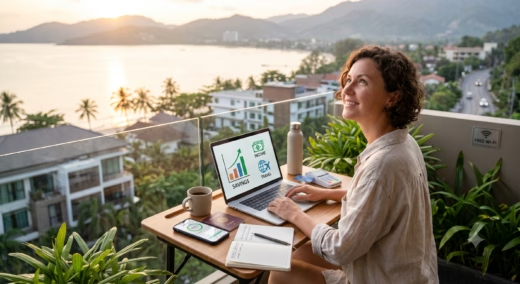
You can make your finances feel steady even while your zip code changes. This quick weekend setup gives you a repeatable money system, so surprises like sudden travel costs, unexpected tax bills, and uneven income cycles don’t knock you off course.
Step 1: Start with a Simple, Reality-Based Budget
List your monthly “must-pays” first (housing, food, insurance, and minimum debt payments), then add travel and entertainment as flexible, secondary categories. Pick one savings goal to fund automatically every month, even if it starts small. A simple plan you can easily follow always beats a complex one you avoid.
Step 2: Choose One Expense Tracking System
Decide between a dedicated app, a bank-connected tracking tool, or a manual spreadsheet—then commit to just one for 30 days to eliminate confusion.
Safety Note: If you prefer spreadsheets, build in formatting safeguards. Research shows that about 88% of spreadsheets used for financial modeling contain critical manual errors that can quietly distort your long-term financial decisions. The best system is the one that stays accurate with minimal effort.
Step 3: Build Two Automated Financial Admin Routines
Consistency is your anchor when time zones, travel days, and busy client weeks blur together. Block out time on your calendar for these two routines:
- The Weekly 15-Minute Check-in: Categorize your recent expenses and scan your accounts for fraudulent or unusual charges.
- The Monthly 45-Minute “Money Date”: Reconcile all accounts, update your overarching budget, and review your savings goals.
Step 4: Automate Your Income Streams
Set up automatic invoicing, professional payment links, and a dedicated “tax set-aside” transfer that moves a fixed percentage of your money to a separate account every single time you get paid. Regularly test your website’s payment forms to catch broken checkout flows before they affect your incoming cash. Reliable income collection is just as vital as earning it.
Step 5: Verify Remote Work Compliance & Business Legalities
Create a lightweight, one-page compliance checklist that covers your work permissions, client contract terms, and tax responsibilities. Review this document every time you change countries or onboard a new client.
As a remote professional trying to maintain financial security as a digital nomad, you’ll want to weigh two primary paths:
- Operating Without an LLC: Simpler, cheaper, and involves fewer moving parts initially.
- Forming an LLC: Offers a formal business structure, potential personal liability protection, and access to clean business banking.
Choose the approach that matches your current risk tolerance, administrative bandwidth, and setup budget.
Streamline Your Business Setup and Ongoing Compliance
Once your core money system is running, the next major win is cutting the administrative clutter that quietly drains your time while traveling.
Using an all-in-one business platform keeps your essentials locked in a single dashboard so you aren’t chasing documents across multiple apps and time zones. With integrated tools to invoice clients, manage receipts, and track your ongoing income, you can stay on top of your cash flow without turning your travel days into paperwork marathons.
For example, platforms like ZenBusiness bring these core operational tasks together, making it significantly easier to keep your remote business organized, legally compliant, and financially transparent on the move. From there, you can easily layer in specialized saving, insurance, and investing tactics that fit your specific route.
Mix-and-Match Tactics to Save, Insure, and Invest
The best financial framework is the one that adapts to your route, risk tolerance, and income rhythm. Treat the strategies below like a menu: pick two that feel doable right now, and level up as your business stabilizes.
- Build a “Travel-Proof” Cash Buffer First: Set a baseline emergency fund target—ideally three to six months of living expenses—and automate small weekly transfers (even $25 to $100) toward it. Delays, illness, or emergency flights home hit fast on the road. Keep this money in a separate, accessible account so it never gets mixed with daily spending.
- Right-Size Your Budget with a Two-Location Average: Instead of budgeting for a single “typical” month, average your expected costs across two real destinations you frequent (e.g., one high-cost hub city and one low-cost base). Divide this budget into three pillars: fixed commitments (subscriptions, debt), nomad basics (housing, transit, food), and business ops (software, taxes).
- Eliminate Daily Friction Costs: Pick one banking or travel “friction” category to optimize every month. Target ATM fees, foreign transaction fees, baggage add-ons, or coworking day passes. For seamless connectivity, using an eSIM is an excellent way to avoid overpriced airport SIM cards while maintaining secure internet during border transitions.
- Build a Modular Insurance Safety Net: Start with the risks that carry the heaviest financial consequences: medical emergencies, trip interruptions, and personal liability. Tailor your add-ons based on your gear and lifestyle—such as specialized electronics coverage if your laptop is your livelihood, or extended international medical coverage if you stay abroad year-round.
- Separate Business Cash From Personal Pay: Even as a solo freelancer or entrepreneur, pay yourself on a fixed schedule (e.g., bi-weekly). Transfer a set salary from your business account to your personal spending account. This prevents you from accidentally overspending your tax or rent reserves when staying in pricier destinations.
FAQ: Financial Security as a Digital Nomad
What taxes do I still owe if I live abroad most of the year?
In most cases, you retain filing obligations in the country of your citizenship or permanent tax residency, alongside potential tax liabilities in the places where you physically perform your remote work. Keep a running log of every state and country you visit, and consult a cross-border tax specialist to establish a clean monthly “tax holdback” routine.
How do I handle inconsistent freelance income without stressing?
Pay yourself a predictable, baseline salary and leave excess profits in your business account as a cash reserve. Base your lifestyle spending on your minimum-bill baseline, and only adjust your personal pay upward when your 90-day rolling income average shows a sustained increase.
Can I legally work on a tourist visa while earning online?
Often, no. While many countries overlook remote work on tourist visas, standard immigration terms technically restrict any form of local labor—even for foreign clients. Always read the official visa guidelines before booking long-term stays, or look into the growing number of official digital nomad visas.
What documentation should I keep to prove my income?
Maintain a secure cloud folder organized by year and month. Store all client contracts, paid invoices, corporate bank statements, and business expense receipts. Additionally, keep a simple travel log detailing your exact entry and exit dates, as tax residency disputes depend heavily on physical presence.
How do I calm the constant anxiety that my income will dry up?
Action cures anxiety. Write down a simple, 48-hour emergency plan you can execute instantly: identify three non-essential expenses to pause, cancel one software subscription, and pitch five warm business leads. Establishing actionable steps is the fastest way to restore your sense of financial security as a digital nomad. Remember, you aren’t alone—as of 2025, over 18 million Americans alone identified as digital nomads, driving rapid growth in lifestyle-specific financial tools.
Turn Remote Income Into a Sustainable Financial Practice
Living on the road can make your money feel temporary if you don’t actively anchor it. The sustainable path forward requires shifting from a mindset of survival to one of long-term financial planning through clear systems and calm decision-making.
Security isn’t a fixed geographical place; it’s a financial practice you pack in your suitcase and repeat wherever you land. Choose just two small moves today—one to protect your immediate cash flow and one to organize your documentation—and add them to your calendar for a quick weekly check-in. That small step in consistency is what buys your long-term freedom.
 Welcome to my blog my name is Charo Hidalgo Gato - ONeil. Here I write about the things I enjoy most like art, music, foodie finds, traveling, sustainable living, cool children's activities, and the occasional rant. I'm a freelance writer, social observer (also a participant), mom, and someone who loves to discover new things first. Leave a comment if you enjoy and if not also leave one.
I'd be delighted to talk to you regarding blogging/writing and any social media marketing needs you may have, just click below to email me.
Welcome to my blog my name is Charo Hidalgo Gato - ONeil. Here I write about the things I enjoy most like art, music, foodie finds, traveling, sustainable living, cool children's activities, and the occasional rant. I'm a freelance writer, social observer (also a participant), mom, and someone who loves to discover new things first. Leave a comment if you enjoy and if not also leave one.
I'd be delighted to talk to you regarding blogging/writing and any social media marketing needs you may have, just click below to email me.